Tuesday, November 25, 2008

The heart of nature - a country estate near Karlovac

The village tourist estate Srce prirode (The Heart of Nature) has been opened in Gorica Lipnička, around twenty kilometers from the town of Karlovac. This family village estate spreads over 12 thousand square meters and contains three autochthonous renovated houses. The accommodation part of the estate offers nine rooms (18 beds), and the guests can also use a restaurant seating 80 people, a wine tasting facility, a gazebo and a tavern seating 50 people. The family estate offers eco food such as different kinds of honey, juices, wines, cured meats, etc. The meals in the restaurant are prepared according to old recipes. Two conference halls are equipped with modern technology. In addition, visitors to
the estate can engage in the following activities: paintball, Village Olympics, culinary workshop, speleo-adventure, football, archery, volleyball, badminton, boccie and berry picking. The owner of the estate also happens to own the 4-star family hotel Korana in Karlovac, a historic and attractive town located around fifty kilometers from Zagreb, with the old town of Dubovac as its trademark.

The hotel is located on Korana River, one of the four rivers in Karlovac, offering 15 double rooms and 3 business suites, as well as gastro, recreation and other offers.

Karlovac County Tourist Board
www.tzkz.hr

Karlovac Tourist Board
www.karlovac-touristinfo.hr

Seosko imanje Srce prirode & Hotel Korana
www.hotelkorana.hr

Vrbnička žlahtina - Original Croatian

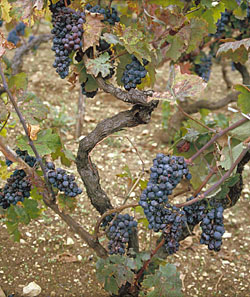
Croatia is well known for its excellent wines, so it is hard to say which one is the best. Although this primarily depends on the personal taste, many experts and “practical wine lovers” believe vrbnička žlahtina is among the best. It is made from the autochthonous grape variety called žlahtina, which is grown in Vrbničko polje, a winegrowing region of protected geographic origin. Depending on the yield, between 700 and 900 thousand bottles of this original dry white wine with controlled geographic origin is made every year.

Connoisseurs describe the wine as “elegant, high-quality, having
a unique aroma and freshness, while all fruity scents and harmonious
features of the variety are expertly preserved “. This is the
reason why the Croatian Chamber of Economy awarded vrbnička
žlahtina the respected Original Croatian mark, stating is “reflects
the traditional Croatian culture of winegrowing, winemaking and
lifestyle in the rural areas on the islands of the Croatian littoral
where survival and sustainable development depend on persistent
and diligent growing of agricultural varieties and their processing
into added-value products.“ The wine should be served chilled at
between 8 and 12 degrees Celsius, and you will enjoy it the most if
you drink it with Mediterranean food. Staying on the island of Krk,
and especially in Vrbnik, a small picturesque town built on a 48-
meter cliff, is certainly an opportunity to try some original Krk food. In addition to fish and seafood prepared with quality local olive oil, it includes homemade pasta and particularly the local lamb, sheep cheese and prosciutto.

Primorje-Gorski Kotar County Tourist Board
www.kvarner.hr

Krk Island Tourist Board
www.krk.hr

Croatia – a respectable camping destination

A meeting of the European Federation of Campingsite Organizations and Holiday Park Associations (EFCO & HP), an organization established in 1979 and bringing together around 25 thousand European campingsites and camp resorts, was held in Umag in late September. Such important convention in Croatia, the region of Istria and the tourist destination of Umag is an acknowledgement of the local camping offer providing the guests with holidays in a beautiful and ecologically preserved environment, keeping up with the growing camping services standards. Croatia has a total of around 226 campingsites and 278 private estate campingsites having a total accommodation capcity of 224,000 persons. The private state campingsites account for around 10,000 units.

According to the Croatian Camping Union, campingsites account for 23.7 percent of the country’s accommodation capacities and they have an approximately equal share in tourist overnights. Around fifteen campingsites having a total capacity of 22.5 thousand persons are classified as four stars, while 57 campingsites having a capacity of a little over 88 thousand persons are classified as three stars. High-category (4 and 3 stars) are mainly in Istria, which also has the most numerous camping capacities, followed
by Primorje-Gorski Kotar County and Zadar County in the third place. Dubrovnik-Neretva County, the southernmost part of Croatia, is the second in the number of four-star campingsites. The Croatian Camping Union evaluated with year’s camping season as successful. According to their estimates, Croatian campingsites had 12.624 million overnights in the first eight months, or 3.2 percent over 2007. Istria, the most developed Croatian camping destination, had 6.825 million overnights, or 3.4 over last year. The average annual campingsite occupancy is 59.1 days, the highest figures achieved in Primorje-Gorski Kotar County – 67.1 days. Of course, the longest stays are achieved in four-star camps – as much as 87 day. The average duration of stay in campingsites is 6.7, with Istria as
number one with an average duration of stay of eight days.

According to the Central Bureau of Statistics, Germans are the most numerous campingsite guests, followed by Slovenia, The Netherlands, Austria, Czech Republic… Every year, the traditional markets are accompanied with new ones. The Croatian Camping Union plans to present the offer more intensively to such guests.

Croatian Camping Union
www.camping.hr

Thursday, April 10, 2008

SAS introduces direct flights to Zagreb

On Monday the 31t of March, SAS introduced flights between Stockholm-Arlanda Airport and Zagreb, Croatia. The line between Stockholm and Zagreb will be operated with departures on Mondays and Friday afternoons. From the 30th of April there will also be departures on Wednesdays.

SAS Sverige has already announced the start of the line between Gothenburg and Split starting on the 7th of June and will continue to operate the line between Stockholm and Split on Tuesdays and Saturdays. With all these direct lines between Sweden and Croatia SAS Sverige will be the largest operator of direct flights from Sweden to Croatia.

"With the new lines we continue our important expansion in Europe. The destinations in Croatia are a result from an increased interest in our flights from Sweden to Croatia, as a destination for holiday but also as a destination for business trips, says Susanne Dahlberg, head of Commercial at SAS Sverige."

"We have been waiting for the line between Stockholm and Zagreb for more than ten years. A direct flight opens up for new travel possibilities such as group- and incentive travels, culture, sports and health travels and not to forget the business travels. With this line and segments we can expect the travel between Sweden and Croatia to increase further, says Dario Matosevic, head of the Croatian Tourist Board in Stockholm".

Source: Easier Travel

Thursday, February 14, 2008

A romantic break in the city of hearts - Zagreb

Champagne, chocolates, abundant red roses in an elegant room in a five-star hotel. A relaxing bath drawn by the butler from the bath menu, a city tour by limousine and a candlelit dinner in an Art Deco restaurant.

Here, on Valentine’s Day, is a romantic package that is available all year at the Regent Esplanade Hotel in Europe’s city of hearts, Zagreb. And at €499 (£370) for a couple for two nights with breakfast, it is a fraction of the price of similar packages in many European cities.

Zagreb might seem a surprising recommendation, but it exudes a lively style and knows how to welcome visitors, young and old, romantic or businesslike. When the good and the great started to arrive in increasing numbers aboard the Orient Express in the early 1920s, a suitably stylish hotel was needed to accommodate them – and up went the Regent Esplanade on a field close to the railway station.

Just over three years ago, the hotel reopened after a two-year renovation that retained the marble and oak-lined entrance and lobby but freshened up the rest of the building. The piano bar and bright, airy Zinfandel’s Restaurant look out over the Oleander Terrace to the Fountain Park. The garden bistro has floor-to-ceiling windows and is famous for its strukli, the Croatian pastry and ricotta cheese speciality. The 209 bedrooms, even without the romantic extras, are comfortable and welcoming and the Emerald Ballroom, with a decorated glass oval in the centre of a ceiling covered with tiny blue lights, is the perfect place for a wedding celebration.

Zagreb can be just as romantic as the hotel and earned its soubriquet because of the tradition of giving decorated honey dough cakes called licitar hearts to loved ones, especially on Valentine’s Day. It is an ideal city for strolling around, hand in hand, dipping into the occasional jewellery shop, cosy café or cultural museum.

Gradec, known as the upper town, is the most charming quarter and most easily reached by a quick funicular ride from Ilica, the city’s main street. The ride takes you to the foot of the 13th-century Lotrascak Tower, from which a cannon is fired at noon every day.

In the quiet streets behind the tower are the Parliament building, the Prime Minister’s office and St Mark’s Church with a roof of red, white and blue tiles in a diagonal pattern, and with two coats of arms. A cluster of museums include the Croatian Museum of Naive Art, with half a dozen rooms full of intriguing and frightening images, and the Zagreb City Museum, with a collection tracing the city’s history.

There you will learn that the citizens of Gradec were often at loggerheads with the people on the neighbouring but lower hill, Kaptol, which has a cathedral with 105m tall spires at its centre. The districts were finally united in 1850, together with adjoining settlements, into the undivided town of Zagreb, leading to the development of the lower town – now the city’s business and shopping heart.

The planners ensured that it remained a pleasant place to wander by creating the “green horseshoe”: a line of parks running down from the main square to the station and linked by the botanical gardens to a parallel line of city squares to the west. The most prominent of these is Marshal Tito Square, which many locals hope will soon be renamed after the imposing building at its centre, the National Theatre.

Sunday afternoon is the best time to stroll around the city when all the museums and shops are closed. Timing is important if couples are not going to fall out on a visit. Weekend breaks should start with a Croatia Airlines flight from Heathrow on a Friday morning, returning on a Sunday afternoon or Monday. The only Saturday morning flight stops en route and the afternoon departure will only get you to your hotel by 9pm.

Shops in the city centre start closing from 3pm on Saturday but those in shopping malls stay open until 9pm. Museums close at 1pm on Sundays and reopen on Tuesdays.

Article Source: Times Online

Friday, January 11, 2008

Everything about Croatia on your cell phone

Ever since the Split-based IT company Gideon Multimedia
presented its new version of the mobiEXPLORE cell phone based
tourist guide in July of 2007 over three hundred thousand tourists
have accessed the guide to inform themselves of the tourist
offer, local customs and points of interest, to reserve a table at a restaurant, a room in a hotel or any of the many other contents the guide offers.

Although targeted above all to tourists, before coming to Croatia
or upon arrival, mobiEXPLORE has shown itself to be very
interesting to local users looking for information of daily culture and entertainment events, and the hospitality and recreation offer.

A tourist guide on the screen of your cell phone provides almost
160 destinations in Croatia and offers information on various
aspects of the tourist offer by way of text, photos and interactive
maps of cities and regions: culture, history, points of interest, active vacationing, accommodation, cuisine on offer, entertainment,
news, useful tips, a mini dictionary for quick access, local customs, events and more.

The project is unique on the global market, is entirely free of
charge to users and is also available at the Internet address www.
mobiexplore.com
.
The project grew out of the independent production of Gideon
Multimedia, the only Croatian member of the Nokia PRO Forum,
a program backed by Finnish Nokia pooling advanced cell phone
program solution developers.

MobiEXPLORE won the gold medal at the ARCA 2007 international
innovation exhibition, and has been included among the prominent
applications on the Nokia web site as an “application that sets
entirely new levels of expression, efficiency and interactivity for
mobile tourist guides.”

The success of the first mobiEXPLORE Croatia project is
confirmation of the feasibility of the announcement of an entire
series of cell phone tourist guides for all of the key destinations
in Europe that the Gideon Company has already started in
collaboration with its strategic foreign partners.

www.gideon.hr

Trends: Eco-hotels, cruises, Croatia await in '08

From hotels to cruising, adventure travel to destinations, USA TODAY asks travel industry insiders to predict the hottest trends for the new year. Here's what in the air — and on land and sea — for intrepid travelers

Emerging destinations.
Carlson Wagonlit's Eastern European bookings are heating up, and Croatia, in particular, is "on fire," says Loucks, thanks in part to the relative strength of the dollar in European countries that don't use the euro. Similarly, lesser-known Latin American destinations such as Nicaragua, where the dollar still has some clout, are drawing more interest among Americans, some of whom are looking for retirement homes, Frommer says.

Read whole article...

Wednesday, August 15, 2007

Island-hopping along the Dalmatian Coast

Sun, seafood and sailing in one of the hottest destinations of the year

SPLIT, Croatia - Up and down the stone piers of Split's raucous port we walked, past a melange of ferries, yachts, tugboats and fishing vessels. Up and down.

Past double-decker sailing yachts with racks of bikes onboard. Past fishermen on low-slung dinghies, squinting at the clouds. Past hobbyists racing 4-foot-long remote sailboats like it was Croatia's own America's Cup.

But nowhere, nowhere was the catamaran that was supposed to whisk us out to Croatia's sun-drenched coastal islands.

"I think it's called the 'Navratilova,'" my husband said.

Thirty minutes later, when we did find the Novalja, we had to laugh. It was a catamaran ferry, not a sailboat. A speedy, muscular workhorse that links Split, the main port along Croatia's upper Dalmatian coast, to the islands of Brac, Hvar, Solta and beyond.

Our Croatian adventure had begun.

Spanish beaches too overbuilt for you? Italy and Greece too crowded? French Riviera sound too expensive? Maybe it's time to go island-hopping in Croatia.

Located east of Italy across the Adriatic Sea, Croatia expects over 200,000 American visitors this year — nearly double the number that arrived in 2005. It also tied for the No. 2 hot destination this year in a survey by the U.S. Tour Operators.

And no wonder. The water is clean and clear, the sun constant, the crowds easy to ditch (except in Dubrovnik), the Croatian kuna a mere 5.33 to the dollar. I usually snort at tourist-advertising slogans, but Croatia's new one — "The Mediterranean as it once was" — is right on the money.

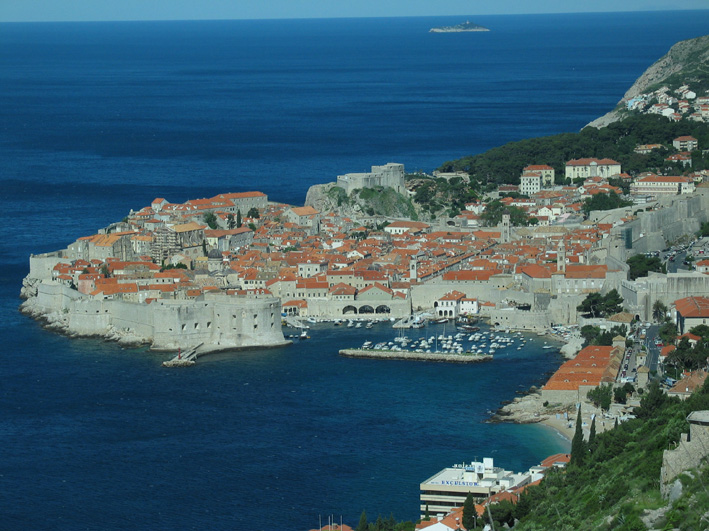
It's been quite the turnaround from the four-year war that engulfed the country in the mid-1990s as Yugoslavia disintegrated. Croatia emerged with a 1,100-mile coast coast; the crown jewel, the walled city of Dubrovnik — a UNESCO heritage site — and enough islands (1,185) to make Greek tourism officials sweat.

Plus, unlike other European destinations (anyone been to London lately?) Americans can afford the trip.

Read the Full story by Sheila Norman-Culp: http://www.msnbc.msn.com/id/20163363/from/ET/

Thursday, July 26, 2007

Summer 2007: Hvar, Croatia

Got a hot tip about what's hot in Croatia this summer?

When I first arrived in Hvar Town, I almost wondered if the ferry from Split had taken a wrong turn and I’d ended up in EuroDisney. The small harbourfront town is almost too picturesque to be real; shiny cobbles, a central square dominated by elegant Venetian architecture lined with white-canopied cafes and a village of terracotta-roofed houses and tiny streets clustered up the hill behind.

It’s long been the hippest resort in Croatia – Roman Abramovich likes to cruise into town on his mega-yacht, and local hero Goran Ivanisevic is a regular at the Carpe Diem bar - but moves are afoot to create a glitzy five-star playground to rival the likes of St Tropez.

Most of this is down to one hotel chain, Suncani Hvar who have recently been taken over and are now investing massively in the nine hotels they own on the island. Gone (or going) are the simple two and three-star accommodations, to be replaced by sleek design hotels with cocktail bars and wi-fi internet access and Ibiza-esque soundtracks on a loop.

Two have opened this summer – the Riva and the Adriana – both members of Small Luxury Hotels of the World and already changing the profile of what had been a fairly egaliatarian tourist mix. Walking along the harbourfront I heard American backpackers, German families, clusters of mini-skirted Italians. But mostly I heard the sound of money; groups of bronzed young things knocking back Camparis and discussing their day’s sailing at the Café Plajca on the harbourfront.

Hvar is an evening town; as with most Croatia resorts, it does suffer from a lack of decent beaches. If you’re feeling lazy, you can stroll down, past the Riva and Carpe Diem and on round the harbour to a small shingle beach close to the Dalmacija hotel. But the best plan is to join the crowds of Croatian holidaymakers who hop on the regular boat taxis to the Pakleni islands – about 30 glorious minutes of drifting across a sea with the clarity of cut glass.

As the sun begins to set on Hvar Town, the real action begins. For many, supper is just a pitstop between early even cocktails and late-night drinks, but the vibe is laid-back and there’s little in the way of clubbing. The late night action centres around Carpe Diem which combines an elegant terrace with low, rattan sofas with a cosy lounge bar all housed in a beautiful Venetian mansion. It’s definitely worth a visit, but I preferred Zimmer Frei, to the right of the main square, smaller, cosier and offering the chance to lounge on white sofa cushions in the tiny street and sip excellent Caiprinhas away from the hordes.

But perhaps one of the simplest pleasures on Hvar is taking part in the evening passagiata – with that must-have accessory, an ice-cream. The Slasticarna (the Croatian equivalent of a gelateria) served me up a fantastic combination of pistachio and chocolate, which I ate strolling between lascivious Italian couples and groups of Croatian holidaymakers. Beautiful place, beautiful people, beautiful ice-cream. What more can you want from a holiday?

Full Story: http://travel.timesonline.co.uk/tol/life_and_style/travel/article2125507.ece

Thursday, June 07, 2007

Best Places in Croatia

Villa Astra, Kvarner
This is an impressive address - even for Croatia's "riviera". Vast rooms are decorated with paintings, sculptures and polished parquet. From the upper floors, tall windows look out on to a duck-egg-blue infinity pool and a garden of magnolias, camellias and palms. At the foot of the grounds is a private beach. Massage pavilions are planned for the waterfront. Nature trails snake along the shoreline and into the hills.

Link: Lovranske Ville


Karmen Apartments, Dubrovnik
Is this the finest spot in old Dubrovnik's Venetian port? Fishermen unload hauls of glistening bream and lobster onto the stone quay; on the next cobbled street, the morning sun touches the Renaissance colonnade of the Rector's Palace. The van Bloemens arrived from London in 1972; Marc's parents founded the Troubadour Coffee House where Jimi Hendrix once played. These four apartments are refreshingly homely with a pretty mix of old and new furniture and homespun bedspreads. Marc is dedicated to keeping Dubrovnik beautiful: he led the battle against brand-name parasols, now banned.

Link: Karmen Apartments


Hotel Valsabbion, Istria Valsabbion's deco-effect front hovers above the marina in the Pjescana uvala district of Pula. Bedrooms are comfortable with lush fabrics, leather sofas, tables topped with Zen pieces; balconies overlook the marina. At the top, a wellness centre offers hydromassage, therapies and an infinity pool. This small boutique hotel is family run: Sonja Peric takes care of the restaurant and the design while her sister Sandra runs the wellness centre and masterminds the hotel. The restaurant has won awards and the food is fabulous; for 10 years now the Valsabbion has been queen of Istrian cuisine.

Link: Valsabbion


Hotel Villa Annette, Istria Overlooking Rabac's bay, Villa Annette offers a super-comfortable minimalism - cream leatherette armchairs, gleaming modern stone floors - enlivened by warm colours from paintings and rugs. The bedroom suites are huge, with extra sofabeds, countryside views and the islands of Cres and Losinj in the foreground. The hotel is one of the pioneers of the Istrian Slow Food movement. You can even sign up for a Slow Food weekend .

Link: Villa Annette


KADO Resort & Spa, Krk
In one bedroom, a giant rose emerges from behind the headboard; in another, two large daisies stretch to the ceiling. The suites have murals and wrought-iron bedsteads, living rooms in rustic fabrics. Masses of outside space too: balconies with views of the island of Cres, shared decks protected by curved stone walls, seating areas and a grill bar. Wooden benches surround a hidden hot tub and in front of the main house are two gorgeous pools - one for adults, one for small children. Then there's the sauna, the restaurant, the massage spa ... and the welcome. Great for couples and young families.

Link: Resort Krk


Eia Eco Art Village, Istria After travelling in Africa and Asia, then working as a holistic therapist in London, Igor returned to Istria to resurrect his great-grandfather's wilderness retreat. It's a 60s-style vision of utopia; your bedroom a strawbale house or tent; water comes from harvested rain although there are some modest modern conveniences like rudimentary showers and a well-equipped kitchen. You may join a course in photography, permaculture, meditation and shamanic dance. Or just help out on the land.

Link: Eia Eco


Hotel & Winery Boskinac, Pag

The winery is like a Roman villa - a tall, terracotta topped country house, fronted by columns and surrounded by vineyards; which is fitting as the island is littered with Roman remains. Pag is a parched but beautiful strip of land with sandy beaches. The winery spills across a hillside above Novalja, the main resort, producing distinctive whites. Boris Suljic and Mirela Sanko have created something classic from new materials. Photos, paintings and dried flowers create the feel of an old country vineyard.

Link: Boskinac


Lojzekova hiza, near Zagreb

Pilgrims have been coming to Marija Bistrica since the 13th century to see the statue of the Virgin Mary. Holiday makers come here in search of deep country. Lojzek's House was built just a decade ago, yet vintage pieces of farm machinery and quirky wooden furniture give the illusion of age. The welcome is genuine though. Pavica and Darko combine boundless energy with a naturally relaxed style, so both house and grounds are a playground for their children as well as yours - along with the animals.

Link: Lojzekova


Prisnjak Lighthouse, north Dalmatia The lighthouse looks like a seaside cottage - apart from the tower emerging from the sea-facing wall. Prisnjak island is as remote and wild as any on this coast, but Murter, with its pretty coastal resorts, is only 25 minutes by boat. Prisnjak's appeal is privacy - an island to yourself - and the views at sunset and sunrise from your own little beach. What's more, the waters are shallow, with steps in for children, and reach bath-like temperatures in summer.

Link: Prisnjak


Mrcara Island, south Dalmatia

A place for Swiss Family Robinsons, more goats than people live on this green islet, the Pavelins' wilderness home. They generate all their own electricity and wash and cook with natural rain water. Guests stay in basic bedrooms in the main house or in three wooden huts by the beach, each with a rudimentary shower. At the front is a pretty sand and pebble beach; the rest of the island has a rocky shoreline, brilliant for fishing and snorkelling. Communal meals in the evenings promise lively conversation.

Link: Mrcara Island

Thursday, April 26, 2007

Quick tips to Plan your Travel to Croatia from Italy

Croatia has become a very popular tourist destination since the restoration of piece in that area. Traghetti Croazia offers great value for those who plan to visit Croatia by cruise-liners from Italy.

Are you planning to visit Italy this summer? Add Croatia to your itinerary.
After many years of conflict throughout the former Yugoslavia, the area is now enjoying a period of peace and stability and has become a very popular tourist destination indeed. In the last ten years Croatia is emerging as one of Europe's fastest-growing tourist destinations, and it is not surprising really, if we consider what Croatia has to offer to travellers.

There you will find the Mediterranean as it once was, framed in a total coastline of over 6000 km of mild climate nature, beautiful mountains with forests, lakes, rivers and waterfalls, friendly and simple people, inexpensive and convenient

Croatia boasts some of the cleanest and most beautiful beaches in Europe: the Croatian coast is an absolute wonder to behold! The country has a long and colourful history, and this is most evident in the various architectural styles on show in its towns, cities and islands. Some of the country's most beautiful buildings, many of them former churches, have since been renovated into hotels and guesthouses, offering visitors a wonderful opportunity to get a real taste of Croatia.


TRAVELLING TO CROATIA :

Due to the long, narrow shape of the country, much of Croatia's land is situated by the sea. As a result, boat and ferry travel has become an important means of transport to both local people and visiting tourists, and it can be considered a relatively comfortable and enjoyable way of getting around Croatia. There are plenty of ferry services operating in and out of the various ports. Many of these simply run domestic services up and down the coast and across to the beautiful islands dotted around the Adriatic, but a growing number of routes are being established that link Croatia with other countries, with Italy being the best served with a number of good services running daily.

Getting to Croatia from Italy by Ferry, there are a few things you should take into consideration, like the frequency of the Ferry services, booking rules, and places where buy tickets…
Although passenger and car ferries do operate throughout the year, Car ferries to and from Croatia get extremely busy during the summer and it is advisable to book your ticket well in advance. This can be done at the various ticket offices located in travel agencies, but what we strongly recommend is to get in touch with a professional agency, to get all you need in one simple stop. That's what Traghetti Croazia (www.traghetti-croazia.it), can do for you! General information's, timetables, tickets, travel assistance and much more, to help you booking with ease your ferry tickets from Ancona, Venezia end Pescara ports. Traghetti Croazia Agency is now open 24/24 and this will speed up and simplify the whole process for you…

THE RESERVATIONS
With Traghetti Croazia it is possible to reserve your marine passages through Internet 24X7. You will be able to contact our office reservations to number 0565/912111 or through email to traghetti@prenotazioni24.it. The telephone reservations are advised for departures to short and in case of urgency.

PAYMENTS
With Ferries Croatia you will be able to choose to pay the following tickets in ways:
- credit card on linens (Encryption protocol SSL 128 bit);
- credit card for telephone (the necessary information will be collected from you from a our operator through telephone);
- bulletin mails them (with immediate shipment of the receipt via fax to number 0565 915898 or through email to traghetti@prenotazioni24.it); for the possessory ones of C/C it mails them will be possible to carry out a postagiro directly;
- banking discount (the accountant rilasciata from the bank, CRO supply will have quickly to be transmitted to our office through fax to number 0565 915898 or through email traghetti@prenotazioni24.it : simple orders of discount will not be accepted, neither written neither telemati to us).

We remember that on every receipt of payment the code of reservation (W must be brought back......) that will attribute the system to you.

THE DELIVERY OF TICKETS

Traghetti Croazia undertakes the delivery of the tickets and the same will be send to all address indicated by you through courier, mail registered letter, via fax or email to you.


Roberto Gardenti
Via G. Cacciò 9, Portoferraio, LI 57037, Italy
Phone: 0565912111
Website: http://www.traghetti-croazia.it

Source: PR Urgent News

Friday, February 02, 2007

To Croatia, for Love? VirtualTourist.com Releases List of Top 10 Unique Romantic Destinations

VirtualTourist, a leader in social-networking travel websites, steers travelers toward cozy spots less frequented with the release of VirtualTourist's Top 10 Unique Romantic Destinations. Its destination picks, which originate from VirtualTourist's database of over 1.4 million travel tips, skip Paris and New York City in favor of places like Croatia and Quebec City.

"When VirtualTourist.com covers the destinations you've heard of, we give you real insider info you won't find anywhere else. So it's no surprise that our list of romantic destinations includes places not commonly suggested, such as Vanuatu over Hawaii, for instance. VirtualTourist is a gold mine of advice, and it offers many paths to adventure," said Giampiero Ambrosi, general manager of VirtualTourist.com.

VirtualTourist's Top 10 Unique Romantic Destinations*

1. Dubrovnik, Croatia - George Bernard Shaw called this ancient walled city "paradise on Earth." Its timeless quality means you can fall in love again and again.

2. Santorini Island, Greece - A sea-ringed volcano, sensational sunsets and renowned local wines win over hearts every time.

3. Québec City, Canada - This historic city with a Euro flavor knows how to charm. Take in museums, the atmospheric Old Town and scenic riverside strolls.

4. Charleston, South Carolina, USA - Infused with Southern hospitality, Charleston enchants with a historic downtown, carriage rides and a romantic harbor.

5. Rothenburg ob der Tauber, Germany - A fortified medieval village, this Bavarian highlight has a fairytale feel. Explore an old castle, stroll down winding alleyways.

6. Udaipur, India - This lakeside jewel, with a palace as its crown, is woven with narrow lanes and countless awe-inspiring views.

7. Porto Venere, Italy - This colorful Mediterranean village, with a 16th century castle and incredible local cuisine, is named after Venus, the goddess of love.

8. Saint-Émilion, France - In vineyard country, this destination lures the visitor with wineries and a medieval charm.

9. Port Vila, Vanuatu - An air of romance lingers in this South Pacific city, full of friendly people and lush tropical scenery.

10. Ushuaia, Argentina - Follow your love to the ends of the earth. The world's southernmost city boasts natural beauty, wildlife and views of snow-capped peaks.


Read the whole article

Croatia Airlines reports flat traffic

Croatia Airlines carried 1.58 million passengers in 2006, a slight increase over the 1.56 million carried in 2005. Scheduled passengers accounted for approximately 88 per cent of the total (1.39 million) and charter passengers the remaining 12 per cent (188,000).

Croatia Airlines' scheduled route network includes domestic and European destinations as well as a link to Tel Aviv, Israel. The fleet comprises a total of 14 Airbus A319, A320 and ATR 42 aircraft. The airline became a regional member of the Star Alliance in December 2004

Source: Janes.com

To book Croatia Airlines ticket click here!

Wednesday, January 10, 2007

Le Méridien Makes Its Debut in the Mediterranean

Starwood Hotels & Resorts Worldwide, Inc.® announces that Le Méridien® Lav has opened its doors in the stunning Mediterranean port of Split. The resort, previously known as Hotel Lav and regaled as the ‘best address in Split,’ has undergone a $150 million renovation and is the first Le Méridien hotel in Croatia, as well as the latest addition to Le Méridien's growing portfolio since Starwood acquired the brand in November 2005.

Read full article

Wednesday, December 20, 2006

The airline gave away my seat ! Now what do I do ?

This winter travel season promises to be a bumpy one, as flight delays continue to increase and more ticketed passengers are turned away at the gate. Airlines almost always book more passengers on a given flight than a plane can accomodate. The odds of being bumped from a flight are greater that they've been in years. Learn what you can get for giving up your seat. Know your rights and beware of airlines bearing gifts.

Read this article

Thursday, December 14, 2006

Seaport Of Rijeka To Become Adriatic Gateway To Europe

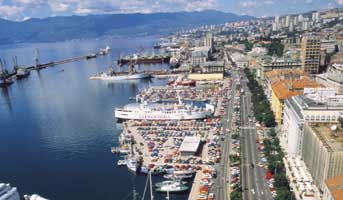
The reconstruction of Croatia’s largest seaport of Rijeka, which should be completed in 2009, will help this Adriatic port to look more like Barcelona or Baltimore, the World Bank said in a press release on its website Friday. The project was launched in 2003 by the Croatian government in cooperation with this international financial institution, reports HINA (Croatia, 03/05).

The project, known as the Rijeka Gateway project, "will change the face of the city and help increase the competitiveness of the Croatian economy by improving the international traffic sector in Rijeka for cargo and passenger transport, modernizing the connections between the harbor and road networks and revitalizing the harbor business activities through better road and bridge maintenance," the World Bank said. "Its new facilities will accommodate cruisers of up to 500 passengers and other passenger ships. The central part of the Rijeka basin will be opened up for commercial use, while local citizens and visitors will be able to access the coastal area, creating an attractive Mediterranean port city," reads the press release.

The project is worth $266 million, and the World Bank has ensured $156.5 million through loans for this purpose. The project is expected to "create a dominant traffic route in Croatia, connecting seaways with European road and railway corridors. Already, because of established road transport through the corridor V, the port of Rijeka generates around 40 percent of its cargo traffic with Hungary, Austria, Slovakia and the Czech Republic. Traffic growth should make Rijeka one of the main ports in the Central and Eastern Europe.

Source

Tuesday, December 12, 2006

Zagreb Is Set to Crown a New Queen of the Hill

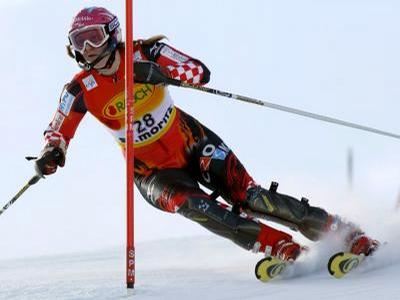
AN elite ski race begins with thousands of reveling fans packing into the stands while the racers, with their plastic armor and hard-won competence, wait shivering on a distant mountaintop. Among spectator events, this is the humane inversion of the gladiator battle; the crowd’s job is to coax the racers through peril and welcome them home to the warm safety of the arena.
Read the whole article

Source: New York Times

Tuesday, December 05, 2006

Croatia Added to European Rail Pass

From the beginning of next year holidaymakers who want to travel across Europe by rail will have several new options with new passes from Eurail.


From January 1st 2007 passes covering rail travel in Croatia, Ireland, Italy and Portugal will be available, as well as Benelux (Belgium, the Netherlands and Luxemburg).

Additionally, Eurail will also have two new country combinations - Austria and Hungary or Italy and Spain from next year.

"Eurail is adapting its pass range to match the way many overseas visitors travel today," said René de Groot, Eurail managing director.

"With holidays abroad getting shorter and more frequent, many travellers have less time for extended journeys throughout Europe."

For more info on Eurail

Source: www.travelbite.co.uk
Tuesday, 28 Nov 2006

Tuesday, November 28, 2006

Travel Insurance

Travel insurance has been around for decades, but the industry has grown rapidly since the terrorist attacks in 2001, reaching sales of more than $1 billion. Before 9/11, only about 10 percent of Americans taking cruises, tours or international trips bought travel insurance. Today that number is around 30 percent, according to the U.S. Travel Insurance Association. About 80 percent of those policies are "per trip" policies that cover the three most common sources of trouble: canceled or postponed trips, medical emergencies, and lost or damaged baggage.

What is covered?

Some policies may exclude terrorism or "acts of God" altogether; others offer broader coverage. For hurricanes, your policy may apply only if you purchased it before the storm was named and then only if your destination is under a mandatory evacuation order.

Cost

A travel insurance policy can add anywhere from 4 to 8 percent to the cost of your trip, depending on your age and how much coverage you want. Web sites such as www.insuremytrip.com can help you compare policies and prices. For example: a coverage for a $3,600 Alaskan cruise came up to $280. Without the insurance, getting sick would have meant deciding between staying home and losing the money or going and being miserable.

Is it worth it?

Travel insurance often makes sense on very expensive trips or on trips that require large, non-refundable deposits or advance payments for hotel stays or special-event tickets. Cruises can fall into this category because most of the cost is paid upfront and canceling even 30 days in advance could mean no refund. But there are also instances where insurance does not make sense for example, if your trip doesn't include high prepaid expenses or if your prepaids,such as airline tickets, are changeable for a small fee. If you rarely get sick, cancellation coverage may not be worth the added expense. Most trips go off smoothly or with minor hassles that tend to affect your mood more than your pocketbook.

Credit Card Coverage

Some credit card companies provide certain travel assistance when you pay for your trip expenses using their card. While helpful, these extras are typically not as comprehensive as travel insurance. If your credit card company already provides certain coverage, you may be able to save some money by buying a policy to fill in the gaps.

Sources

If you book your trip through a travel agent or cruise line, you likely will have the option to add travel insurance at the time of purchase. In some cases, insurance may be included in your package. For example, Elderhostel includes certain kinds of coverage, including emergency medical evacuations, in each trip at no additional cost. You can also buy policies from a number of companies such as Access America or Travel Guard.

Medical care

Medicare will not cover health care expenses outside the United States. Likewise, some private health plans limit coverage for those traveling outside the plan's network. Travel insurance can bridge this gap but you should check with your plan provider to make sure your're not paying twice for the same thing. Also,some travel policies may exclude pre-existing medical conditions unless you obtain a waiver or purchase the policy for in advance. If you have recently has heart attack or have diabetes, for example, cjeck with the provider to make sure your're covered.

Medical evacuation

Travel Insurance can pay for evacuation to your home of to the nearest suitable medical facility, important if you become injured in out-of-the-way places. Such evacuations can run into tens of thousands of dollars.

The odds

According to a recent survey, 17 percent of pleople who buy travel insurance actually wind up filing a claim. That's fairly high compared with other types of insurance,considering that one of the fundamental tenets of insurance is that most people won't use it-if they did, policies would be unaffordable. For some, however, travel insurance can turn out to be a wise investment. A young couple were traveling to Australia from Washington D.C,via Charlotte and Los Angeles. Because it was a trip with many connecting flights, the opted to pay $269 for insurance. Their policy cobered trip cancellation up to $9,000 (the amount of their prepaids), medical expanses up tp $10,000 per a person and medical transportation up to $20,000 per a person; it also had an assortment of coverages for delays or lost baggage. The trip got off to a shaky start. The couple became stranded in Charlotte when thei flight to Los Angeles was canceled due to heavy smoke from California forest fires. Their travel insurance paid for a hotel in Charlotte, meals during their delay and cab fare to and from the airport. It also reimbursed them for a prepaid hotel room in Sydney they were unable to use because of their late arrival. They eventually got another flight, but one of thei bags didn't make it, and the insurance paid to replace Jodie's formal dress for their night out at the opera. The travel insurance helped them to smooth out the rough spots and still have a great trip.

Source: (AARP Bulletin,October 2006)
Author: (Joe Hearn)

More about Travel Insurance

Monday, November 13, 2006

The Roots behind the Tang - the Zinfandel story

VINELAND

DNA sleuths find the 'original Zin'
Coveted 'Californian' grape's genetic fingerprint traced back to its source By WILLIAM CAMPBELL


In August, the California state legislature passed a bill recognizing Zinfandel as the state's official "historical wine." This caused an immediate outcry among passionate Pinot fans, and sent waves of astonishment rippling through the upper echelons of Napa Valley's otherwise staid Cabernet dynasties.

Many people laughed, but the case for recognizing Zinfandel was a strong one.

First brought to the state during the 1849 Gold Rush, by the 1860s it had already become a coveted grape, presumably because when Zinfandel is grown in California's Mediterranean climate it produces a fruity, spicy, high-alcohol wine that is literally ready to drink straight from the barrel. By the start of the Prohibition era in 1920, Zinfandel had actually become the most widely planted grape in California.

Although it accounts for only 9.8 percent of the state's crush today (ceding to Cabernet and Chardonnay), Zinfandel is grown almost nowhere else in the world, leading many to still consider it "California's own."

The controversy was quite spirited, but ultimately proved moot when Governor Arnold Schwarzenegger vetoed the bill, claiming that it would be unfair to single out any particular grape, despite Zinfandel's deep historical roots in the state.

While this tempest in a wine glass quickly blew over, we were left wondering where Zinfandel came from, since all sides in the debate acknowledged that the grape certainly wasn't a native of the state.

To help answer this question, we spoke with Carole Meredith, professor emeritus at University of California, Davis. Widely know in the wine world as "Dr. DNA" for her work in vine genetics, Meredith explained that cracking the origin of Zinfandel required a combination of good old-fashioned detective work and groundbreaking genetic research.

The first clue to Zinfandel's origins came in 1967, when Austin Goheen, a plant pathologist at UC Davis, was vacationing in Italy. While drinking a local Puglian wine known as Primativo, Goheen noted its similarity to Zinfandel. He had Primativo vine cuttings propagated in the Davis research vineyards, and, in 1971, a group of ampelographers (botanists who identify grape varietals based on leaf shape and other physical characteristics) pronounced Zinfandel and Primativo to be indeed one and the same.

The only problem was that Primativo was well-documented as itself being a nonnative varietal that had arrived in Italy long after Zinfandel had already been established in California.

So California Zinfandel and Italian Primativo were both the same grape, but neither was native, which suggested a third, presumably European, country of origin. But which country?

In the late '70s and early '80s, Croatian researchers began to lobby UC Davis with samples of Plavac Mali, the grape that was consistently producing the best red wines in Croatia's Dalmatian Coast region.

Their bold claim was that this grape was the long-lost "original Zin." While there were indeed many similarities, there were also enough subtle differences that a "not proven" verdict was given, and the question was left open for future research.

In ensuing decades, two enormous breakthroughs were made in the field of genetic research. The first was the discovery that within the DNA of every animal and plant (including humans and grapevines), there are certain sites where the DNA subunits simply repeat themselves over and over again.

More importantly, the number of these random "simple sequence repeats" (known as SSRs) at each site varies from person to person, or grape variety to grape variety (grapes are propagated by taking cuttings from one vine to create another, so all Zinfandel vines, for example, are genetically identical).

To help understand this, imagine that two vinyl Led Zeppelin albums are found in an attic. The first is scratched in such a way that there is a single loud "pop" heard in the pause between the lyrics "a stairway" and "to heaven." Now imagine that the second album is in slightly worse shape, and that there are three sharp "pops" heard in exactly the same part of the song.

If both albums were converted to MP3 files and uploaded to pirate music-sharing sites, they would then be copied all over the world. However, even many years and hundreds of generations later (since MP3 copying is like making a perfect clone), it would still be possible to count the number of "pops" in that particular part of the lyric sequence and determine whether the file you were listening to originated from the first or the second album.

Back on the DNA sequence, there are thousands of sites where SSRs are found between two otherwise uniquely identifiable spots, which makes it possible to isolate a particular one for each person and count the number of repeats which that individual has at the site. The number of random repeats a person has at one site, which we will call "site A," ranges from 1 to 200. Therefore, I would have a one-in-200 chance of having the same number of repeats at "site A" as my best friend. The odds of my friend and I independently matching at a second, unrelated site are also 1 in 200, so the odds of us each having the same number of repeats at both "site A" and "site B" would be only one in 40,000. Include 13 different sites in the analysis, as the FBI does in its CODIS forensic DNA database, and the odds of two different people having the same patterns would rise to one-in-a- billion-trillion (other than for identical twins, who would match exactly).

The second major breakthrough in the DNA detective game was the creation of a technique called polymerase chain reaction (PCR) that allows scientists to effectively cut out a specific piece of DNA -- a piece that in our case would include one of the repeating sequences mentioned above.

Since these repeating sequences are repetitions of charged particles, my "site A" snippet is likely to have a different total charge from that of my friend's. These charges are measured in an elegant but decidedly low-tech manner.

After being amplified in a PCR machine, my DNA snippets and my friend's are each put in different lanes at the edge of a gel-filled Petri dish. The dish is then placed in an electrostatic field, which causes the differently charged DNA snippets to race across the gel at different speeds.

After a certain period of time, the gel is chemically "fixed" (like developing a photograph) and the positions of the two samples show whether the two DNA samples, at least at the site being examined, are matches or not.

When a baby is conceived, or a new vine species is created by cross-pollination, each parent contributes half the DNA, which means that the above technique can be used to prove parent/child links as well.

After years of painstaking DNA sequencing, this is exactly what Meredith's UC Davis team found -- Plavac Mali was not Zinfandel, but was instead the result of a cross between Zinfandel and an obscure Croatian grape known as Dobricic.

Finding both a parent and child in Croatia heavily hinted that the heritage of the missing parent would be Croatian as well, but for years the research teams returned from the fields with bushels of samples, only to find that none of them tested out.

Finally, in 2001, the team visited an ancient vineyard of mixed vines planted high up the Dalmatian Coast and found nine intriguing-looking specimens of a nearly extinct varietal known locally as Crljenak Kastelanski.

The tests came back as a perfect match -- at long last the origin of Zinfandel had been found. Of course, one couldn't help lament that Zinfandel wasn't revealed to have had an Austrian connection, or it just might be California's official state grape today.

For more background on vine DNA, or other comments, please contact vinelandtalk@hotmail.com

Friday, Nov. 10, 2006 The Japan Times