Croatia's top five holiday islandsCroatia's stunningly beautiful islands tend to get overrun in peak season, but late August and September are the perfect time to enjoy warm waters, ancient towns and fantastic food
Best for couples: Vis
Vis is an ideal romantic hideaway. As well as tucking yourselves away on one of numerous spectacular and secluded bays, you can tour the island, discovering its extensive vineyards, palm, pine, olive, oleander, fig, carob and mulberry trees, and more than 300 herbs (ideal for self-catering), local seafood and wine. My favourite "domestic" restaurant (as places that use only local or eco- produce are known) is at Stoncica Bay. Run by the Lincir brothers, it overlooks an idyllic cove. Also good are Kantun towards the Kut end of Vis town, and for a romantic meal, the palm-filled arboretum restaurant-bar of Villa Kaliopa (V Nazora 32, +385 21 711755) makes a magical setting.
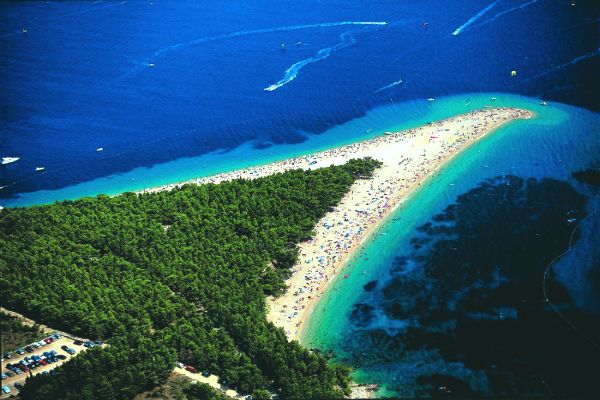
Elsewhere, you can marvel at the old fishing boats at Komiza, on the south-west of the island, investigate military history from Venetian to English to Tito, or snorkel in the emerald waters of Stiniva Cove, watching out for loggerhead turtles and bottlenose dolphins. Under new ownership from the beginning of the season is Hotel San Giorgio in Kut, round the bay from Vis town. It has 10 stylish rooms (+385 21 711362, hotelsangiorgiovis.com, doubles from €68) and offers lovely Croatian dinners and a fantastic breakfast.
• For tours and activities on Vis, see alternatura.hr/onama-en.php. More information from vis-special.com
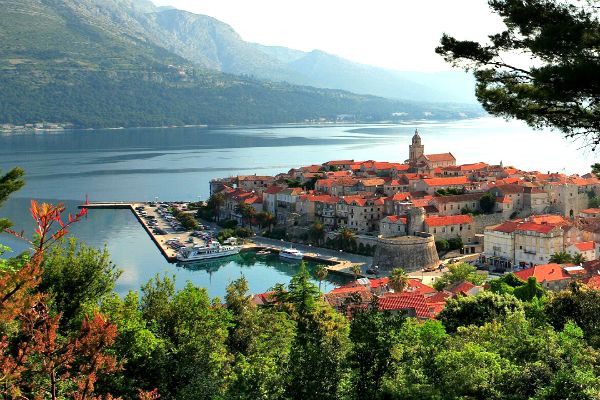
Reached by catamaran or ferry from Split, Rijeka or Dubrovnik, this island was called Korkyra Melainia, "Black Korcula", by the ancient Greeks because of its dense oak and pine forests. Korcula combines a hint of Dubrovnik chic with an abundance of natural beauty. Just like Dubrovnik, the medieval old town of Korcula is squeezed onto a peninsula. The narrow stone lanes all lead down to the sea from the pretty St Mark's Square with its 15-century cathedral and museum. The latter houses Greek and Roman artefacts from the island and Venetian art, as well as documenting the local shipbuilding and stonemasonry traditions. Stay in the old town at the excellent Marco Polo apartments (marcopolo-apartments.com, doubles from €35). The explorer is said to have been born in Korcula in 1254.
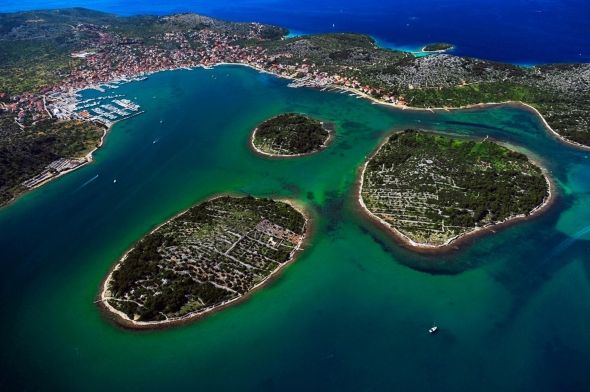
As well as the architectural splendour, sample the work of Croatian artists in the Gallery Vapor (facebook.com/vaporgallery), before retiring to a cafe on the tree-lined promenade overlooking the sea and the 48 smaller islands that make up the Korcula archipelago. Catch a taxi boat to Badija or Vrnik, just off shore, or head inland to visit the vineyards and bell-towers of Zrnovo.
For food, try U Maje i Tonke, just metres from the harbour entrance to the old town. Its "Dalmatian tapas", all made from local produce (goat's cheese, ham, fish paste, aubergines) cost from 30KN (£3.75) and it has great local wines. For the traditional Dalmatian outdoor grill of fish or cevapcici (tasty sausage stubs of minced pork, lamb or beef), try Planjak on the edge of the old town near the ferry terminal, from £6.
• More information from korculainfo.com
Croatia's top five holiday islandsCroatia's stunningly beautiful islands tend to get overrun in peak season, but late August and September are the perfect time to enjoy warm waters, ancient towns and fantastic food
reddit this James Hopkin The Guardian, Friday 19 August 2011 Article history
Spectacular seclusion … Stiniva Cove, Vis, Croatia. Photograph: Alamy
Best for couples: Vis
Vis is an ideal romantic hideaway. As well as tucking yourselves away on one of numerous spectacular and secluded bays, you can tour the island, discovering its extensive vineyards, palm, pine, olive, oleander, fig, carob and mulberry trees, and more than 300 herbs (ideal for self-catering), local seafood and wine. My favourite "domestic" restaurant (as places that use only local or eco- produce are known) is at Stoncica Bay. Run by the Lincir brothers, it overlooks an idyllic cove. Also good are Kantun towards the Kut end of Vis town, and for a romantic meal, the palm-filled arboretum restaurant-bar of Villa Kaliopa (V Nazora 32, +385 21 711755) makes a magical setting.
Elsewhere, you can marvel at the old fishing boats at Komiza, on the south-west of the island, investigate military history from Venetian to English to Tito, or snorkel in the emerald waters of Stiniva Cove, watching out for loggerhead turtles and bottlenose dolphins. Under new ownership from the beginning of the season is Hotel San Giorgio in Kut, round the bay from Vis town. It has 10 stylish rooms (+385 21 711362, hotelsangiorgiovis.com, doubles from €68) and offers lovely Croatian dinners and a fantastic breakfast.
• For tours and activities on Vis, see alternatura.hr/onama-en.php. More information from vis-special.com
Best for culture: Korcula
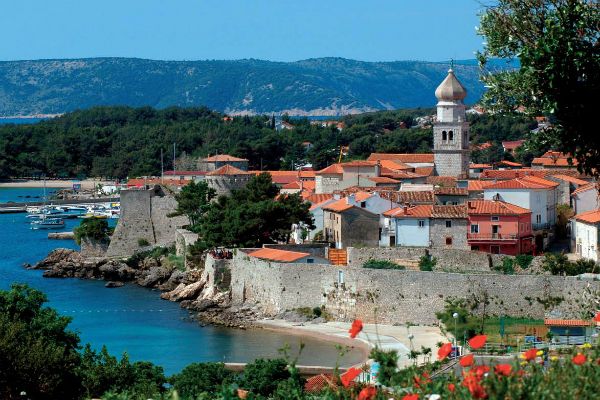
Korcula town with St Mark's cathedral. Photograph: Alamy Reached by catamaran or ferry from Split, Rijeka or Dubrovnik, this island was called Korkyra Melainia, "Black Korcula", by the ancient Greeks because of its dense oak and pine forests. Korcula combines a hint of Dubrovnik chic with an abundance of natural beauty. Just like Dubrovnik, the medieval old town of Korcula is squeezed onto a peninsula. The narrow stone lanes all lead down to the sea from the pretty St Mark's Square with its 15-century cathedral and museum. The latter houses Greek and Roman artefacts from the island and Venetian art, as well as documenting the local shipbuilding and stonemasonry traditions. Stay in the old town at the excellent Marco Polo apartments (marcopolo-apartments.com, doubles from €35). The explorer is said to have been born in Korcula in 1254.
As well as the architectural splendour, sample the work of Croatian artists in the Gallery Vapor (facebook.com/vaporgallery), before retiring to a cafe on the tree-lined promenade overlooking the sea and the 48 smaller islands that make up the Korcula archipelago. Catch a taxi boat to Badija or Vrnik, just off shore, or head inland to visit the vineyards and bell-towers of Zrnovo.
For food, try U Maje i Tonke, just metres from the harbour entrance to the old town. Its "Dalmatian tapas", all made from local produce (goat's cheese, ham, fish paste, aubergines) cost from 30KN (£3.75) and it has great local wines. For the traditional Dalmatian outdoor grill of fish or cevapcici (tasty sausage stubs of minced pork, lamb or beef), try Planjak on the edge of the old town near the ferry terminal, from £6.
• More information from korculainfo.com
Best for relaxation: Mali Losinj
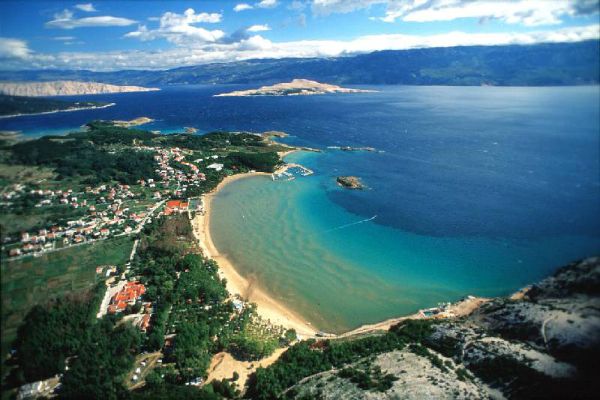
Heading to the beach on Mali Losinj. Photograph: Alamy Situated in the Kvarner region of the northern Adriatic, and reached by ferry from Zadar, Mali Losinj is an island in an archipelago of more than 30 small isles. The colour of the sea is an astonishing deep green as the island is heavily forested. Because of this, it's known as the island of vitality, ideal for those needing a rejuvenating break.
In the main port, also called Mali Losinj, try the Klickovic apartments (apartmani-hrvatska.com/osobnaen.asp?BR=4440, doubles from €37) for heart-soothing views across St Martin's Bay. Veli Losinj, about a mile south, is an old fishing settlement with a mix of Venetian and Greek features and beautiful bays ideal for a restorative swim. Renew your sense of smell at the Aromatic Island Garden (miomirisni-vrt.hr) on the edge of town, where a guided tour takes you through a heavenly sample of the island's flora and fauna. Then get hiking through the Cikat park and forest. After all that healthy activity, you can treat yourself to fine traditional dishes at Konoba Dalmacija (Mete Vidulica 19, +385 51 232400) in Mali Losinj, or in one of the restaurants overlooking the sea in Veli Losinj.
• More information from losinia.hr/losinj/destination
Croatia's top five holiday islandsCroatia's stunningly beautiful islands tend to get overrun in peak season, but late August and September are the perfect time to enjoy warm waters, ancient towns and fantastic food
reddit this James Hopkin The Guardian, Friday 19 August 2011 Article history
Spectacular seclusion … Stiniva Cove, Vis, Croatia. Photograph: Alamy
Best for couples: Vis
Vis is an ideal romantic hideaway. As well as tucking yourselves away on one of numerous spectacular and secluded bays, you can tour the island, discovering its extensive vineyards, palm, pine, olive, oleander, fig, carob and mulberry trees, and more than 300 herbs (ideal for self-catering), local seafood and wine. My favourite "domestic" restaurant (as places that use only local or eco- produce are known) is at Stoncica Bay. Run by the Lincir brothers, it overlooks an idyllic cove. Also good are Kantun towards the Kut end of Vis town, and for a romantic meal, the palm-filled arboretum restaurant-bar of Villa Kaliopa (V Nazora 32, +385 21 711755) makes a magical setting.
Elsewhere, you can marvel at the old fishing boats at Komiza, on the south-west of the island, investigate military history from Venetian to English to Tito, or snorkel in the emerald waters of Stiniva Cove, watching out for loggerhead turtles and bottlenose dolphins. Under new ownership from the beginning of the season is Hotel San Giorgio in Kut, round the bay from Vis town. It has 10 stylish rooms (+385 21 711362, hotelsangiorgiovis.com, doubles from €68) and offers lovely Croatian dinners and a fantastic breakfast.
• For tours and activities on Vis, see alternatura.hr/onama-en.php. More information from vis-special.com
Best for culture: Korcula
Korcula town with St Mark's cathedral. Photograph: Alamy Reached by catamaran or ferry from Split, Rijeka or Dubrovnik, this island was called Korkyra Melainia, "Black Korcula", by the ancient Greeks because of its dense oak and pine forests. Korcula combines a hint of Dubrovnik chic with an abundance of natural beauty. Just like Dubrovnik, the medieval old town of Korcula is squeezed onto a peninsula. The narrow stone lanes all lead down to the sea from the pretty St Mark's Square with its 15-century cathedral and museum. The latter houses Greek and Roman artefacts from the island and Venetian art, as well as documenting the local shipbuilding and stonemasonry traditions. Stay in the old town at the excellent Marco Polo apartments (marcopolo-apartments.com, doubles from €35). The explorer is said to have been born in Korcula in 1254.
As well as the architectural splendour, sample the work of Croatian artists in the Gallery Vapor (facebook.com/vaporgallery), before retiring to a cafe on the tree-lined promenade overlooking the sea and the 48 smaller islands that make up the Korcula archipelago. Catch a taxi boat to Badija or Vrnik, just off shore, or head inland to visit the vineyards and bell-towers of Zrnovo.
For food, try U Maje i Tonke, just metres from the harbour entrance to the old town. Its "Dalmatian tapas", all made from local produce (goat's cheese, ham, fish paste, aubergines) cost from 30KN (£3.75) and it has great local wines. For the traditional Dalmatian outdoor grill of fish or cevapcici (tasty sausage stubs of minced pork, lamb or beef), try Planjak on the edge of the old town near the ferry terminal, from £6.
• More information from korculainfo.com
Best for relaxation: Mali Losinj
Heading to the beach on Mali Losinj. Photograph: Alamy Situated in the Kvarner region of the northern Adriatic, and reached by ferry from Zadar, Mali Losinj is an island in an archipelago of more than 30 small isles. The colour of the sea is an astonishing deep green as the island is heavily forested. Because of this, it's known as the island of vitality, ideal for those needing a rejuvenating break.
In the main port, also called Mali Losinj, try the Klickovic apartments (apartmani-hrvatska.com/osobnaen.asp?BR=4440, doubles from €37) for heart-soothing views across St Martin's Bay. Veli Losinj, about a mile south, is an old fishing settlement with a mix of Venetian and Greek features and beautiful bays ideal for a restorative swim. Renew your sense of smell at the Aromatic Island Garden (miomirisni-vrt.hr) on the edge of town, where a guided tour takes you through a heavenly sample of the island's flora and fauna. Then get hiking through the Cikat park and forest. After all that healthy activity, you can treat yourself to fine traditional dishes at Konoba Dalmacija (Mete Vidulica 19, +385 51 232400) in Mali Losinj, or in one of the restaurants overlooking the sea in Veli Losinj.
• More information from losinia.hr/losinj/destination
Best for foodies: Pag
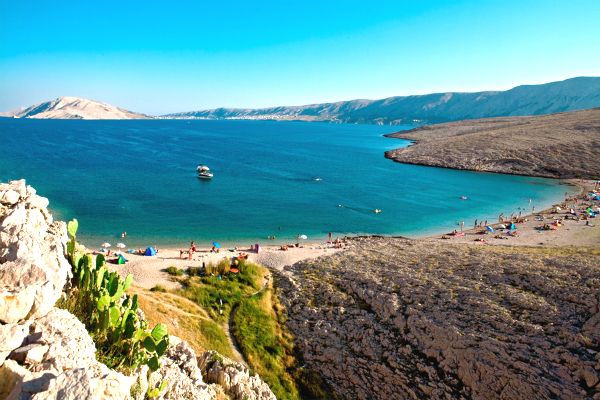
Hand-slicing local prsut on Pag. Photograph: Alamy Pag is known for its stunning moonlike landscape, its secluded coves, and for cheese, lamb, lace, and salt. For peaceful, rocky bays, you should aim for Proboj, though best of all is Lun on the northernmost end of the island. The town (with an Illyrian and Roman past) also boasts vineyards and olive trees, and the salty grass (from strong sea winds) gives the sheep's cheese and meat its distinctive flavour. Visit a family-run cheese factory, Sirana Gligora (sirena.hr), in the village of Kolan, and in Pag town there's a salt museum and a gallery of traditional lace. Also here is the small, friendly Dalmatian-style Konoba Bile (Jurija Dalmatinca 35, +385 23 611127, konoba means tavern), serving local prsut (Dalmatian double-smoked ham), sardines, the famous cheese, local brandy and wines. You may also hear locals singing traditional songs.
As in the rest of Dalmatia, big hotels are best avoided; it's far more interesting (and cheaper) to stay in family-run pensions, such as Pension Gea (+ 385 23 600272, geajurkopag.com, doubles from €32) which has spacious rooms and is a 10-minute walk from the old town.
• More information from valamar.com/pag-island/attractions-holidays
Croatia's top five holiday islandsCroatia's stunningly beautiful islands tend to get overrun in peak season, but late August and September are the perfect time to enjoy warm waters, ancient towns and fantastic food
reddit this James Hopkin The Guardian, Friday 19 August 2011 Article history
Spectacular seclusion … Stiniva Cove, Vis, Croatia. Photograph: Alamy
Best for couples: Vis
Vis is an ideal romantic hideaway. As well as tucking yourselves away on one of numerous spectacular and secluded bays, you can tour the island, discovering its extensive vineyards, palm, pine, olive, oleander, fig, carob and mulberry trees, and more than 300 herbs (ideal for self-catering), local seafood and wine. My favourite "domestic" restaurant (as places that use only local or eco- produce are known) is at Stoncica Bay. Run by the Lincir brothers, it overlooks an idyllic cove. Also good are Kantun towards the Kut end of Vis town, and for a romantic meal, the palm-filled arboretum restaurant-bar of Villa Kaliopa (V Nazora 32, +385 21 711755) makes a magical setting.
Elsewhere, you can marvel at the old fishing boats at Komiza, on the south-west of the island, investigate military history from Venetian to English to Tito, or snorkel in the emerald waters of Stiniva Cove, watching out for loggerhead turtles and bottlenose dolphins. Under new ownership from the beginning of the season is Hotel San Giorgio in Kut, round the bay from Vis town. It has 10 stylish rooms (+385 21 711362, hotelsangiorgiovis.com, doubles from €68) and offers lovely Croatian dinners and a fantastic breakfast.
• For tours and activities on Vis, see alternatura.hr/onama-en.php. More information from vis-special.com
Best for culture: Korcula
Korcula town with St Mark's cathedral. Photograph: Alamy Reached by catamaran or ferry from Split, Rijeka or Dubrovnik, this island was called Korkyra Melainia, "Black Korcula", by the ancient Greeks because of its dense oak and pine forests. Korcula combines a hint of Dubrovnik chic with an abundance of natural beauty. Just like Dubrovnik, the medieval old town of Korcula is squeezed onto a peninsula. The narrow stone lanes all lead down to the sea from the pretty St Mark's Square with its 15-century cathedral and museum. The latter houses Greek and Roman artefacts from the island and Venetian art, as well as documenting the local shipbuilding and stonemasonry traditions. Stay in the old town at the excellent Marco Polo apartments (marcopolo-apartments.com, doubles from €35). The explorer is said to have been born in Korcula in 1254.
As well as the architectural splendour, sample the work of Croatian artists in the Gallery Vapor (facebook.com/vaporgallery), before retiring to a cafe on the tree-lined promenade overlooking the sea and the 48 smaller islands that make up the Korcula archipelago. Catch a taxi boat to Badija or Vrnik, just off shore, or head inland to visit the vineyards and bell-towers of Zrnovo.
For food, try U Maje i Tonke, just metres from the harbour entrance to the old town. Its "Dalmatian tapas", all made from local produce (goat's cheese, ham, fish paste, aubergines) cost from 30KN (£3.75) and it has great local wines. For the traditional Dalmatian outdoor grill of fish or cevapcici (tasty sausage stubs of minced pork, lamb or beef), try Planjak on the edge of the old town near the ferry terminal, from £6.
• More information from korculainfo.com
Best for relaxation: Mali Losinj
Heading to the beach on Mali Losinj. Photograph: Alamy Situated in the Kvarner region of the northern Adriatic, and reached by ferry from Zadar, Mali Losinj is an island in an archipelago of more than 30 small isles. The colour of the sea is an astonishing deep green as the island is heavily forested. Because of this, it's known as the island of vitality, ideal for those needing a rejuvenating break.
In the main port, also called Mali Losinj, try the Klickovic apartments (apartmani-hrvatska.com/osobnaen.asp?BR=4440, doubles from €37) for heart-soothing views across St Martin's Bay. Veli Losinj, about a mile south, is an old fishing settlement with a mix of Venetian and Greek features and beautiful bays ideal for a restorative swim. Renew your sense of smell at the Aromatic Island Garden (miomirisni-vrt.hr) on the edge of town, where a guided tour takes you through a heavenly sample of the island's flora and fauna. Then get hiking through the Cikat park and forest. After all that healthy activity, you can treat yourself to fine traditional dishes at Konoba Dalmacija (Mete Vidulica 19, +385 51 232400) in Mali Losinj, or in one of the restaurants overlooking the sea in Veli Losinj.
• More information from losinia.hr/losinj/destination
Best for foodies: Pag
Hand-slicing local prsut on Pag. Photograph: Alamy Pag is known for its stunning moonlike landscape, its secluded coves, and for cheese, lamb, lace, and salt. For peaceful, rocky bays, you should aim for Proboj, though best of all is Lun on the northernmost end of the island. The town (with an Illyrian and Roman past) also boasts vineyards and olive trees, and the salty grass (from strong sea winds) gives the sheep's cheese and meat its distinctive flavour. Visit a family-run cheese factory, Sirana Gligora (sirena.hr), in the village of Kolan, and in Pag town there's a salt museum and a gallery of traditional lace. Also here is the small, friendly Dalmatian-style Konoba Bile (Jurija Dalmatinca 35, +385 23 611127, konoba means tavern), serving local prsut (Dalmatian double-smoked ham), sardines, the famous cheese, local brandy and wines. You may also hear locals singing traditional songs.
As in the rest of Dalmatia, big hotels are best avoided; it's far more interesting (and cheaper) to stay in family-run pensions, such as Pension Gea (+ 385 23 600272, geajurkopag.com, doubles from €32) which has spacious rooms and is a 10-minute walk from the old town.
• More information from valamar.com/pag-island/attractions-holidays
Best for beauty and buzz: Hvar
Sunset drinks in Hvar town. Photograph: Alamy The ferry arrives in the old town, Stari Grad, which lies at the bottom of a stunning five-mile-long bay, sheltered by densely wooded hills. The town was founded in the year of Aristotle's birth (384BC), and is a maze of stone alleys, along which Edward VIII and Mrs Simpson once lost themselves. They also dined at the Jurin Podrum restaurant (Donja Kola 24, +385 21 765448, established 1917), which now serves nouvelle cuisine dishes of local seafood (from shrimp to grouper to octopus stew with homemade olive bread), followed by lavender-flower deserts.
In the centre of town is Tvrdalj castle, home of 16th-century poet, Petar Hektorovic. It has a tower, a baroque portal, a pond teeming with mullet and an exquisite garden. Stay in the old town, close to the majestic St Stephen's tower, at San Nikola Apartments (Bartola Kasica 3, +385 91 915 2705, studios for two from €40 a night).
If you want to join the designer party crowd amid exquisite Venetian and Austrian architecture, take a 20-minute bus ride to Hvar town. In peak season, the town is heaving with Italians, non-stop party posers, and, of late, posh English yachties. Never Better (+385 91 4636120, never-better.net, one-bed flats from €30 a night) is just steps away from the harbour.
Take a taxi boat (from £3.75) to St Clement, one of the nearby Pakleni (meaning "pine resin") islands for lunch at the Bacchus "domestic" restaurant on Palmizana bay (+385 91 253 3796, bacchus-palmizana.com). Sitting under olive trees and overlooking the sea, you can choose from grilled fish, wild boar and goat's meat, and a selection of tasty local cheeses, fruits and patés, all washed down with local prosek, a sweet dessert wine. Back in Hvar town, Bistro Alviz (+385 21 742797, hvar-alviz.com) on Svetog Stjepana by the bus station is one of the best-value places in town.
For biking, sailing, sea kayaking, rock-climbing, hiking and tours of the island's famous vineyards and lavender fields, try Hvar Adventure (+385 91 154 3072, hvar-adventure.com).
When you're tired of Hvar's bars and boutiques, visit its 17th-century theatre, and the 13th-century Arsenal (once used for repairing war galleys), where you'll find a great art gallery, Hvaroom (hvaroom.com) and a terrace cafe. Most of the nightlife is pretty in-your-face, but down an alley off the harbour indie club Bar Kiva has a recently installed old oak floor and caters for a cooler clientele, with good music and cocktails. Or watch the yachts (and celebrities) in the harbour from the relaxing vantage point of Caffe Gromit (yes, named after the Plasticine mutt!)
• More information from hvarinfo.com and croatia.hr. Bmibaby (bmibaby.com) has flights from East Midlands Airport to Dubrovnik from £138 return
• James Hopkin's new trilogy of short stories set in Dalmatia will be broadcast on Radio 4 in March 2012